Vivekanada Cultural Centre – Design Competition
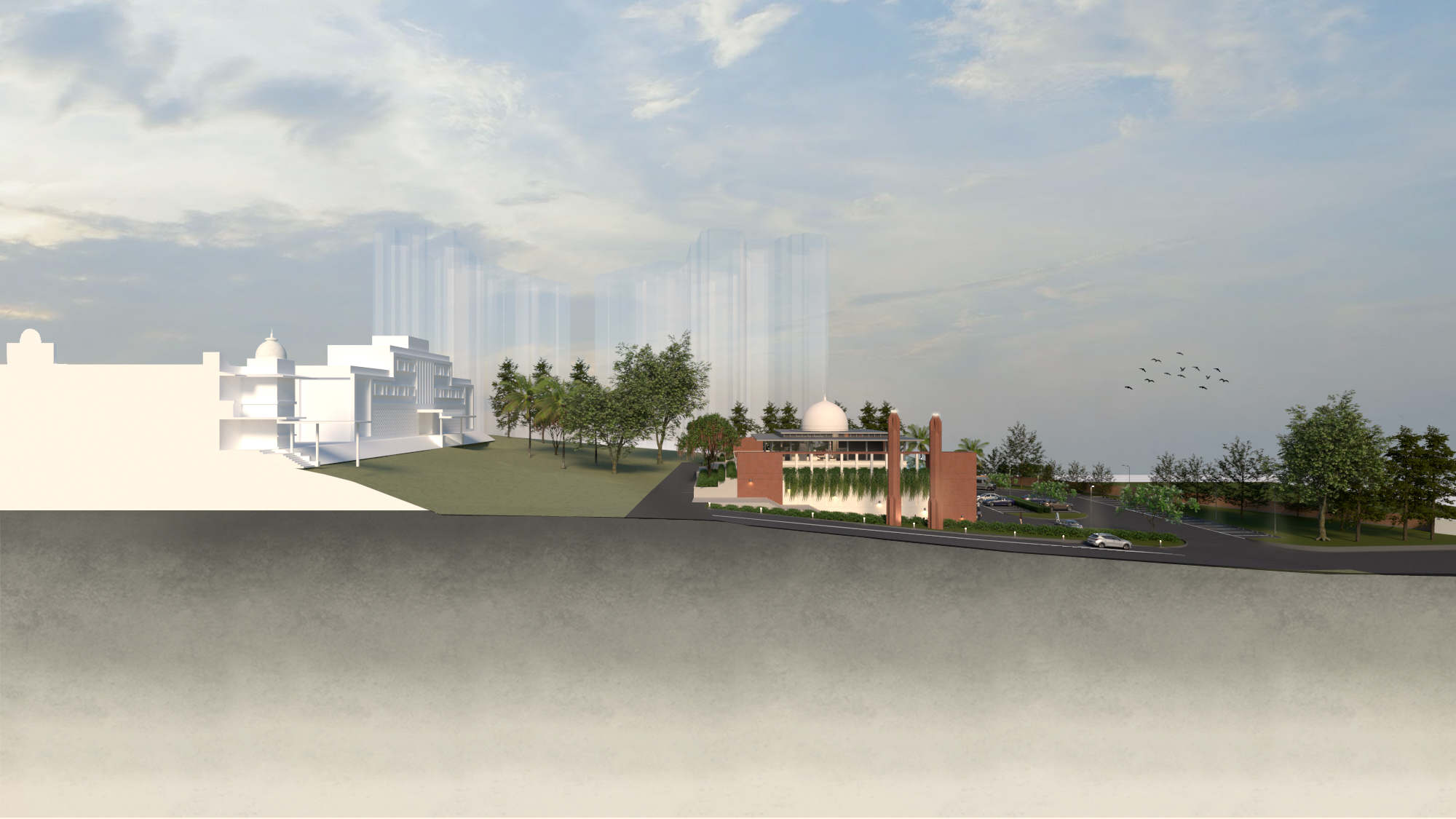
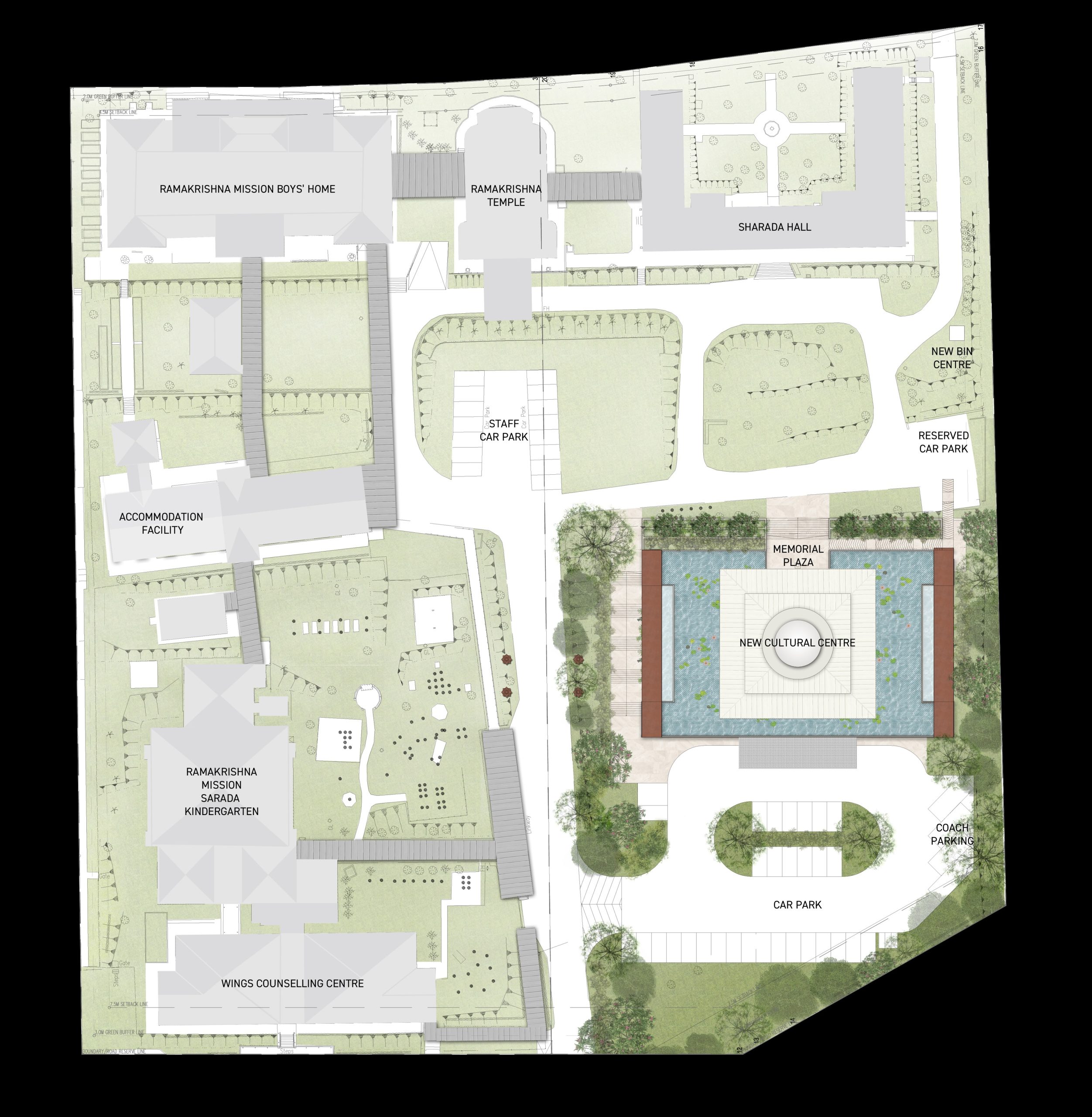
The project proposes a contemporary cultural centre conceived in close dialogue with its historic context. Positioned as a deferential intervention, the scheme carefully organises access and movement across the site while preserving the visual and spatial primacy of the three conserved buildings to the rear.
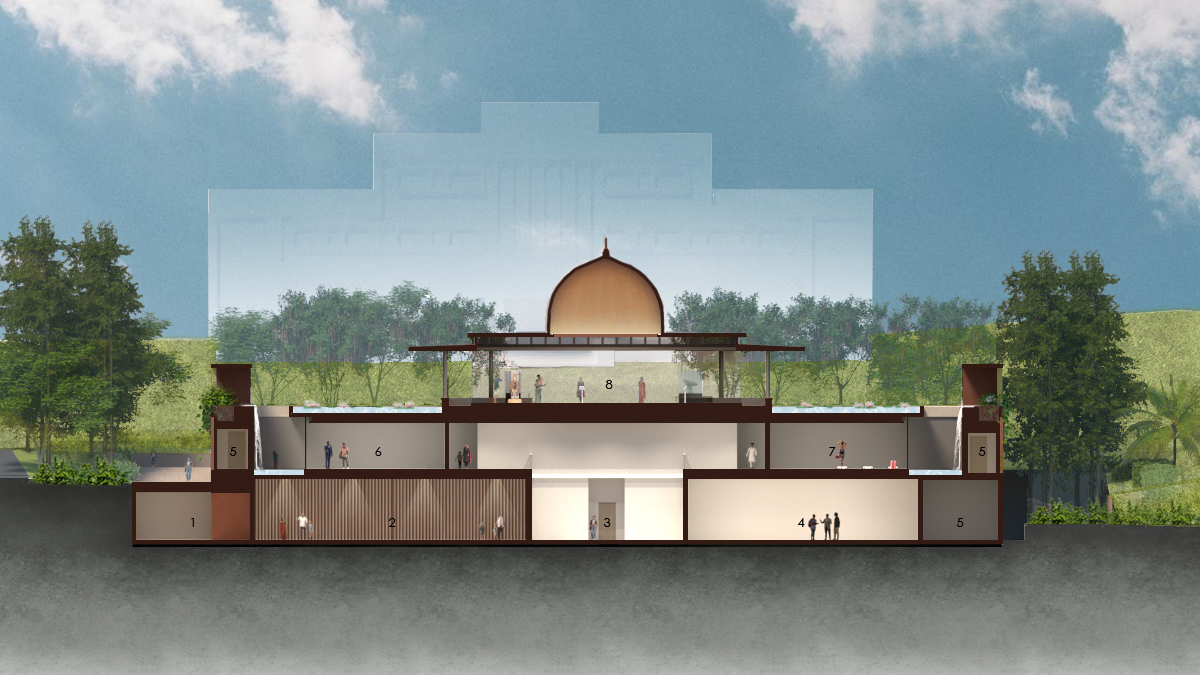
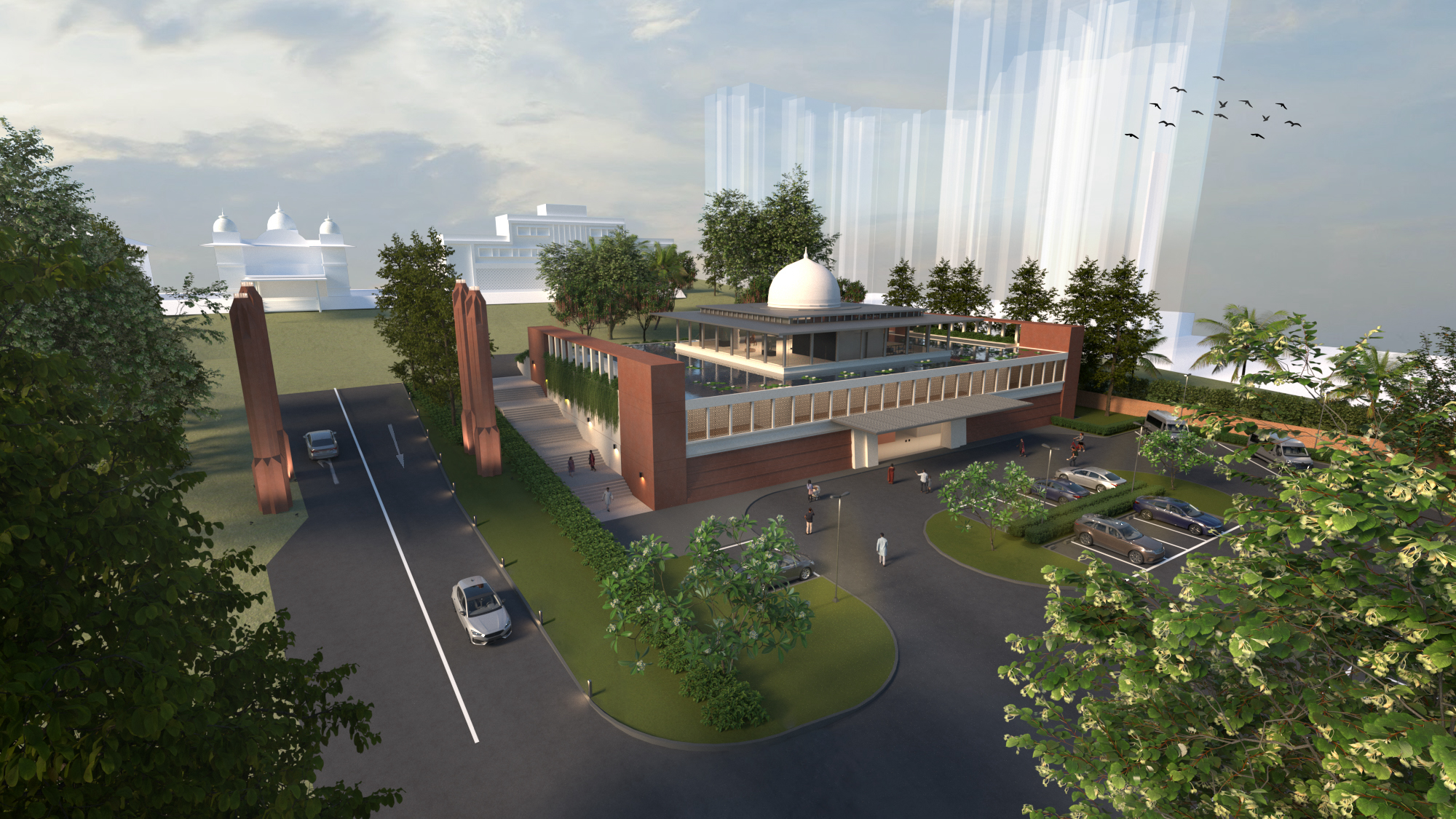
Set at a lower datum, the cultural centre maintains unobstructed visual connections to the conserved structures beyond. Its overall massing draws from the proportions and geometry of Sharada Hall, establishing a sense of symmetry and alignment that resonates with the existing architectural language.
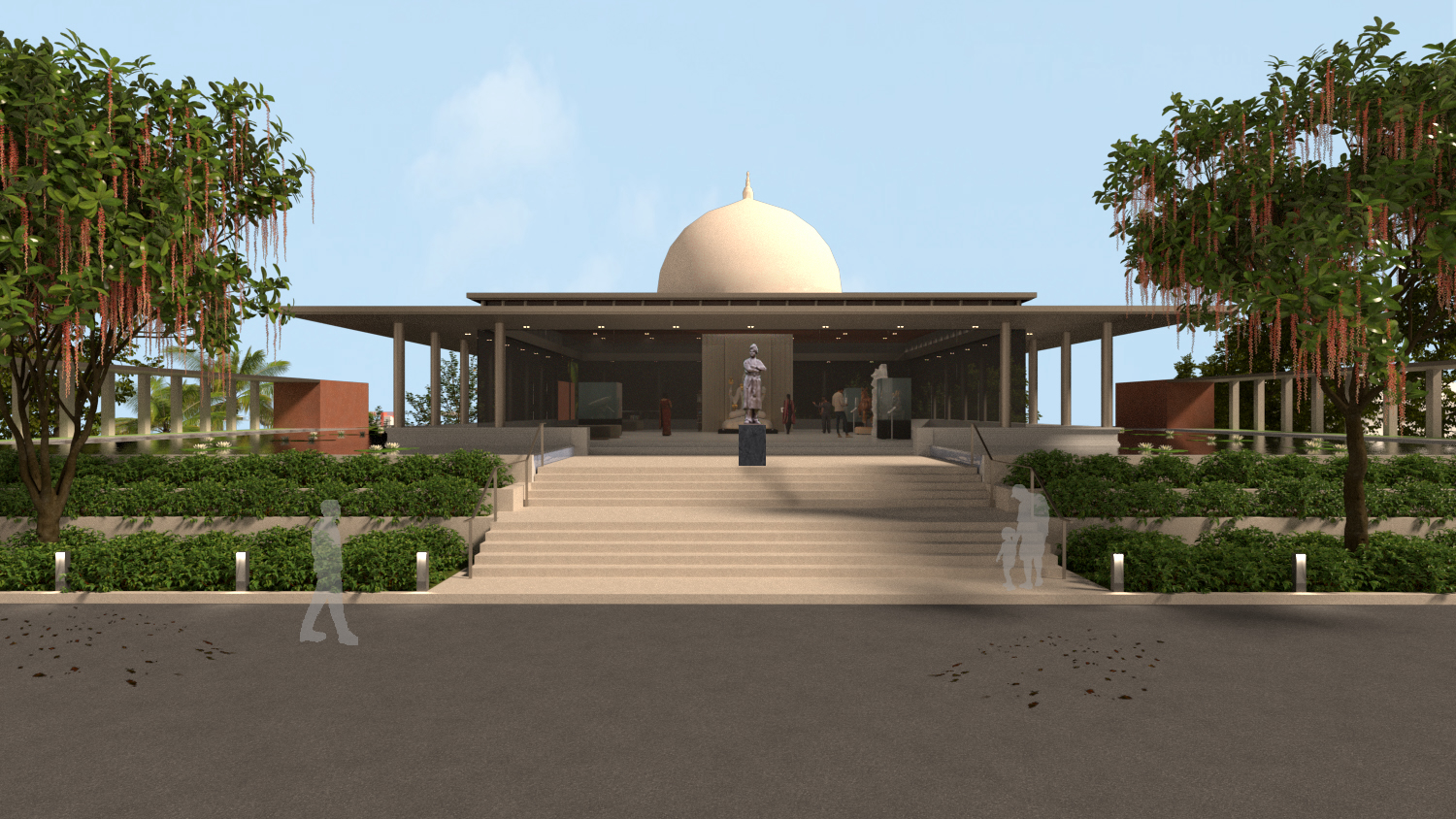
A generous linear staircase is introduced along the building’s edge, forming a direct and legible connection between the lower ground plane and the conserved precinct. This element acts both as a primary circulation spine and as a transitional device, mediating between the new insertion and the historic fabric.
Material articulation reinforces this hierarchy: a grounded base of heavier materials anchors the building, gradually giving way to lighter expressions toward the roofline, thereby reducing its perceived mass. The dome—referencing the typology of mission homes—is reinterpreted through contemporary construction and detailing, with integrated glazing that establishes a dialogue between traditional form and modern tectonics.
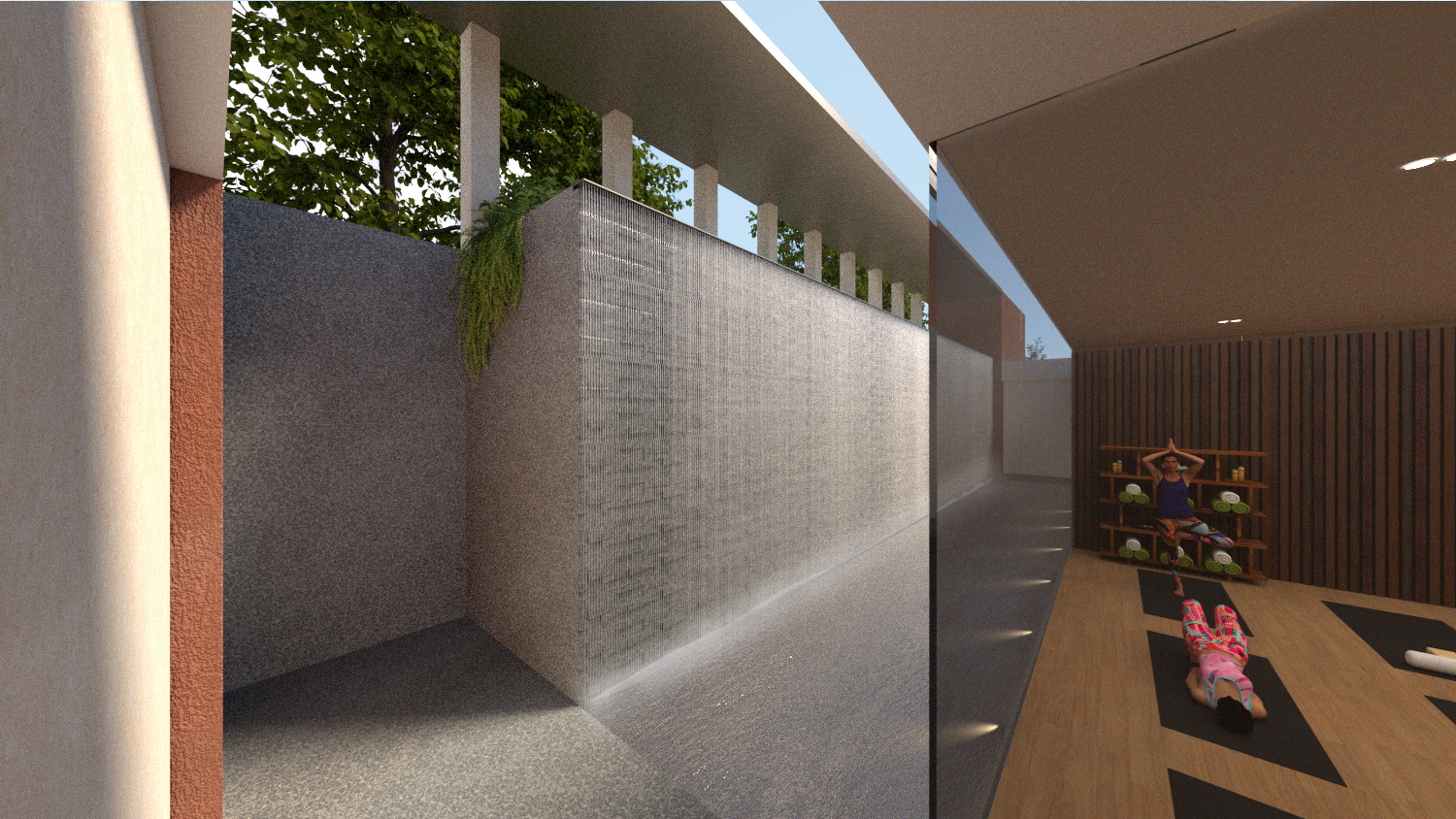
Internally, a glazed exhibition volume frames curated views toward the conserved buildings, reinforcing a continuous awareness of context. This space is encircled by a water lily pond, introducing a contemplative foreground and enhancing the sensory quality of the environment. Flanking courtyards, each paired with water features, bring daylight deep into the plan while fostering a calm, atmospheric interior condition.
Through calibrated control of scale, form, and materiality, the cultural centre operates as a complementary backdrop to the conserved ensemble. The project establishes a coherent relationship between heritage and contemporary architecture—one that is contextually grounded while responsive to present-day civic use.